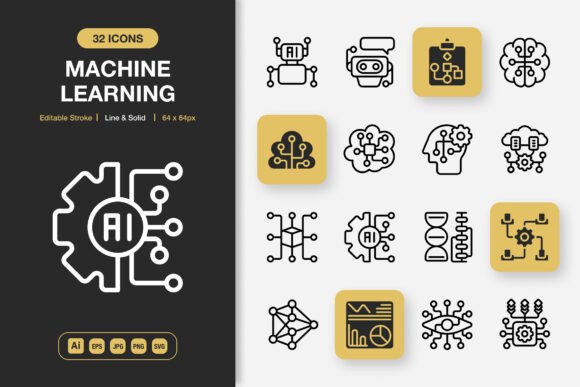
Machine Learning Icons: A Modern Graphic Design Asset for Content Creators
As a seasoned blog designer and digital publisher, I’ve reviewed countless design assets over the years. From stock photos to custom illustrations, the right visual elements can make or break your content’s performance. Recently, I came across Machine Learning Icons, a set of high-quality graphics that immediately caught my eye with their clean, minimalist approach. These icons are more than just decorative—they’re tools for visual storytelling that help bloggers, publishers, and marketers build stronger brand identity and reader trust.
A Fresh Editorial Mood with Strong Visual Cues
The first thing that stood out to me about Machine Learning Icons is the editorial mood they convey. The design is modern, uncluttered, and subtly tech-forward without feeling overly corporate or cold. This makes them ideal for niches like AI, data science, digital marketing, online education, and even lifestyle blogs that want to incorporate smart technology themes. The icons feel educational yet approachable, which is a rare balance in graphic design assets aimed at professional use.
What I appreciate most is how these icons support a cohesive visual language. Whether you're building an infographic on neural networks or designing a social media post about machine learning trends, the consistency in style helps maintain a polished look throughout your content. This kind of visual harmony is essential for creating a strong brand identity, especially when working with multiple platforms and formats.
Real-World Publishing Use Cases
Machine Learning Icons are incredibly versatile and can be integrated into a wide range of publishing scenarios. Here are some practical ways I’ve already started using them in real workflows:
- Featured Images: Adding a relevant icon to your blog's featured image instantly elevates the professionalism and clarity of the topic being presented.
- Pinterest Graphics: These icons help create visually engaging pins that stand out in a crowded feed. Their minimalist nature ensures they don’t distract from key headlines or calls to action.
- Article Headers: When placed beside subheadings, they guide readers through complex topics with intuitive visual cues, improving visual hierarchy.
- Newsletter Banners: The subtle design works well in email templates where bold visuals might not fit. They add sophistication without overwhelming the message.
- Downloadable Resources: Perfect for digital guides, worksheets, and lead magnets focused on AI or automation. The icons signal value and expertise at a glance.
- Category Thumbnails: Use them to differentiate sections of your blog or website—readers will recognize patterns and navigate more easily.
- Canva Templates: These icons work beautifully within drag-and-drop tools, making it easy to craft social media posts or ad creatives quickly and consistently.
Why It Works for Content Marketing
One of the biggest challenges in content marketing is standing out while maintaining credibility. Machine Learning Icons offer a way to do both. Their design supports a professional-looking content page by aligning with modern aesthetics and enhancing readability. In affiliate marketing, for example, a well-placed icon next to a product feature can significantly increase click-through potential by drawing attention to key benefits.
For digital educators and online course creators, these icons are a powerful addition to eBook covers and worksheet designs. They provide a visual shorthand for concepts that might otherwise require lengthy explanations. This is especially valuable when designing infographics or summarizing complex ideas in digestible formats.
Boosting First Impressions and Clickability
In the fast-paced world of digital publishing, first impressions matter. Machine Learning Icons contribute to a stronger initial impact by reinforcing your message through imagery. For instance, placing an icon next to a headline like “How AI Can Transform Your Business” adds immediate context and visual interest. Readers may not even read the full headline but still understand what the piece is about based on the icon alone.
This subtle reinforcement also improves category recognition. If you run a blog covering multiple topics, using consistent icons for each section helps readers identify and return to their favorite content faster. Over time, this builds familiarity and trust, which are critical for long-term engagement and SEO success.
Where Machine Learning Icons Shine Brightest
These icons perform exceptionally well in hero images, article thumbnails, and social media previews. They scale well and retain clarity, so they’re perfect for platforms like Pinterest where image resolution is crucial. Additionally, their versatility allows them to be used in media kits, digital ads, and affiliate content visuals without losing effectiveness.
I’ve found that pairing them with different font styles—such as sans serif, display, or script fonts—adds depth to your layout. For example, using a sleek sans serif with these icons gives a clean, modern vibe suitable for web design projects. Meanwhile, a handwritten font paired with the same icons can soften the tone for lifestyle or creative entrepreneurs focusing on AI in everyday life.
Use Cases to Approach with Caution
While Machine Learning Icons are highly adaptable, there are situations where they may need careful integration. In small mobile thumbnails, for instance, the level of detail could get lost, reducing their impact. Similarly, if you’re working with text-heavy blog images, these icons should complement rather than compete with the copy.
They also may not be the best fit for websites that require a very minimal visual system or those operating in serious professional niches where subtlety is key. In such cases, simpler line-based icons might be preferable. Additionally, avoid using them on low-contrast backgrounds unless you test variations to ensure readability remains intact.
Publisher Tips for Optimal Performance
Before finalizing any design asset in your workflow, here are a few steps I recommend taking with Machine Learning Icons:
- Test on Desktop and Mobile Screens: Ensure the icons remain legible and impactful across all devices.
- Preview as a Thumbnail: Resize the graphic to see how it looks in smaller formats—especially important for blog archives and social feeds.
- Place Inside a Real Blog Layout: See how the icons interact with your existing color scheme, typography, and spacing.
- Check Contrast and Readability: Especially if your site uses dark mode or unconventional color combinations.
- Try in Black and White: Assess whether the design still communicates clearly without color.
- Review File Size: High-resolution graphics are great, but oversized files can slow down your site. Compress wisely to keep load times optimal.
- Confirm Commercial Licensing: Always double-check licensing terms before using icons on monetized websites, affiliate pages, or paid digital products.
Creating Consistency Across Digital Platforms
One of the standout features of Machine Learning Icons is how they help unify your creative design across various channels. Whether you're designing for your website header, newsletter headers, or digital downloadables, having a consistent set of icons strengthens your brand identity and makes your content more recognizable.
For bloggers who publish content upgrades or printable designs, these icons can become part of your signature style. Think of them as a visual shortcut to communicate innovation and insight. When combined with a strong headline and a compelling call to action, they can transform a simple PDF into a premium-looking digital guide.
Design Asset Value for Creative Entrepreneurs
Small business owners and creative entrepreneurs often juggle multiple roles—from content creation to branding and marketing. Machine Learning Icons serve as a reliable graphic design asset that simplifies the process of building a cohesive visual system. They allow you to express complex ideas with clarity and elegance, which is especially useful in fields like SaaS, AI consulting, or edtech.
If you’re selling digital downloads or running an affiliate marketing site, these icons can enhance the perceived value of your offerings. They give your content a modern edge that appeals to readers seeking expert insights, helping you stand out in competitive spaces like the creative marketplace.
Final Thoughts on Integrating Machine Learning Icons
In summary, Machine Learning Icons are a valuable addition to any content creator's toolkit. They support editorial quality, improve website presentation, and help maintain a strong visual identity across platforms. Whether you're crafting a new website header, designing a lead magnet, or updating your social media graphics, these icons offer a fresh perspective on how to present technical and innovative topics with style and substance.
That said, like any design asset, they require thoughtful placement and testing to ensure they meet your specific needs. As always, consider your audience and the message you want to send. With the right approach, Machine Learning Icons can elevate your content marketing efforts and leave a lasting impression on your readers.